


WCOB vs Regular COB LED Strip: What Are The Key Differences?
Introduction
For modern commercial, architectural and retail lighting projects, dot‑free continuous linear light is one of the most critical requirements for lighting designers and contractors. Traditional COB LED strips already deliver smoother lighting compared with SMD strips, yet many installers still notice faint dot‑spot artifacts in shallow‑profile channels or close‑view installations.
This is where WCOB LED strip enters the market. Built upon standard COB technology, WCOB optimizes chip layout, phosphor coating and light‑diffusion structure to solve residual dot‑spot pain points.
In this article, we break down the core differences between WCOB and regular COB LED strips, covering light performance, CRI, cutting flexibility, heat dissipation, cost and real‑world application scenarios, helping you select the right product for your wholesale or lighting project.
What is Regular COB LED Strip?
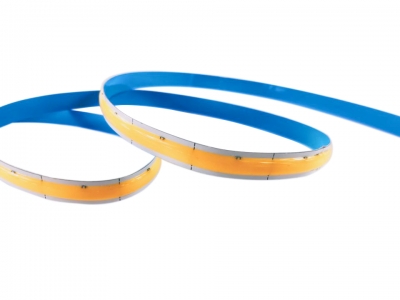
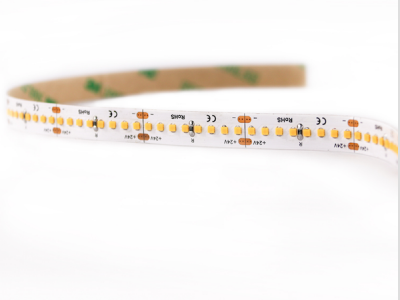
COB (Chip‑on‑Board) technology mounts hundreds of tiny LED chips directly onto flexible PCB substrates, then covers chips with integrated phosphor glue. Compared with discrete SMD LED tape, regular COB removes individual component packaging and achieves largely continuous light output.
However, standard COB still has limitations: ‑ Under close viewing or inside ultra‑shallow aluminum profiles, faint dot‑spot shadows may still appear; ‑ Chip density and phosphor uniformity vary heavily based on factory production standards; ‑ Some budget regular COB models cannot reach ultra‑high CRI consistently across the full length of strip.
Regular COB works well for indirect cove lighting, cabinet lighting and projects with enough distance between strip and diffuser.
What Is WCOB LED Strip?
WCOB is an upgraded iteration of COB linear lighting. It optimizes chip arrangement density, phosphor coating uniformity and internal light‑mixing structure. The core goal is to eliminate residual dot‑spot effect, even under direct viewing or within shallow‑depth narrow channels.
Well‑manufactured WCOB achieves truly seamless dot‑free light output without relying on deep diffuser profiles, while maintaining high CRI performance, stable color consistency along the whole strip length. It targets high‑end commercial lighting where light quality cannot be compromised.
Head‑to‑Head Comparison: WCOB vs Regular COB LED Strip

| Feature | Regular COB LED Strip | WCOB LED Strip |
|---|---|---|
| Light Uniformity | Smooth for indirect lighting; faint dot‑spots may show in shallow profiles or close‑view installation. | Nearly zero dot‑spot, seamless continuous light, performs excellent even in shallow channels or direct viewing. |
| CRI Performance | Typically CRI 80‑90; color consistency depends heavily on chip binning. | Stable high CRI ≥90 across full strip length, low color shift under dimming. |
| Cutting Interval | Common cuttable every 50mm | Flexible cutting segment, keeps consistent light performance on short trimmed sections. |
| Heat Dissipation | Good; high‑power versions require aluminum profile for heat sinking | Optimized chip layout improves heat distribution; still recommend heat sink for high‑wattage projects. |
| Cost | Mid‑range, cost‑effective for general commercial projects | Premium price level; higher manufacturing requirement for phosphor and chip arrangement. |
| Best‑fit Scenarios | Cove lighting, cabinet indirect lighting, budget decorative projects | Retail display, museum lighting, luxury hospitality, narrow‑profile architectural linear lighting, high‑end signage. |
Key Advantages of WCOB LED Strip
1. Truly dot‑free illumination without deep diffusers
The biggest pain point for lighting contractors using regular COB is visible dot artifacts when the diffuser sits very close to the light source. WCOB’s optimized light‑mixing structure removes this defect, saving material cost for deep‑groove aluminum profiles in many projects.
2. Reliable high‑CRI color consistency
For retail displays, museum exhibits and hotel decorative lighting, accurate color rendering is non‑negotiable. WCOB keeps stable CRI performance along the entire strip roll, reducing batch‑to‑batch color deviation risk for large‑scale projects.
3. Stable performance after short‑segment cutting
Many regular COB strips suffer uneven brightness after cutting into very short pieces. WCOB maintains balanced light output even for short custom‑trimmed segments, ideal for complex‑shape installation.
Limitations You Should Know
WCOB is not always the better choice for every project:
1.Higher budget cost: WCOB comes with a price premium. For indirect cove lighting hidden far behind diffusers, standard regular COB can deliver satisfying results with lower project cost.2.Heat management still matters: Even with improved layout, high‑density WCOB still needs proper heat dissipation via aluminum profiles for high‑wattage long‑run installation. Poor heat sinking will shorten service life.
Which One Should You Choose For Your Project?
Choose Regular COB LED Strip if: ‑ You work on indirect cove lighting where strips are hidden away from direct sight; ‑ Project budget is limited and deep aluminum profiles are already included in design; ‑ General‑purpose decorative lighting with no strict close‑view requirement.
Choose WCOB LED Strip if: ‑ Installations use shallow‑depth narrow channels or direct‑view linear lighting; ‑ Projects require high‑end color rendering: retail showcase, museum, luxury hotel interior; ‑ You need to frequently cut strips into many short custom‑length segments.
Conclusion
Regular COB LED strips offer balanced performance and cost for most general commercial linear lighting jobs. WCOB represents an upgraded solution to solve the residual dot‑spot defect, delivering superior uniformity and color consistency for high‑spec projects.


 ChatNow
 ChatNow
 Chat Now